

Lower back pain affects people of all ages, from office professionals to athletes. Prolonged sitting, poor posture, lack of physical activity, and muscle imbalance are some of the most common causes. The good news is that physiotherapy can help relieve pain and restore normal movement without the need for medication or surgery.
Why Physiotherapy Is Important for Back Pain
Physiotherapy focuses on identifying the root cause of pain rather than just treating symptoms. With the right exercises and guidance, it improves flexibility, strengthens supporting muscles, and reduces stress on the spine.
7 Physiotherapy Exercises for Lower Back Pain
1. Pelvic Tilts
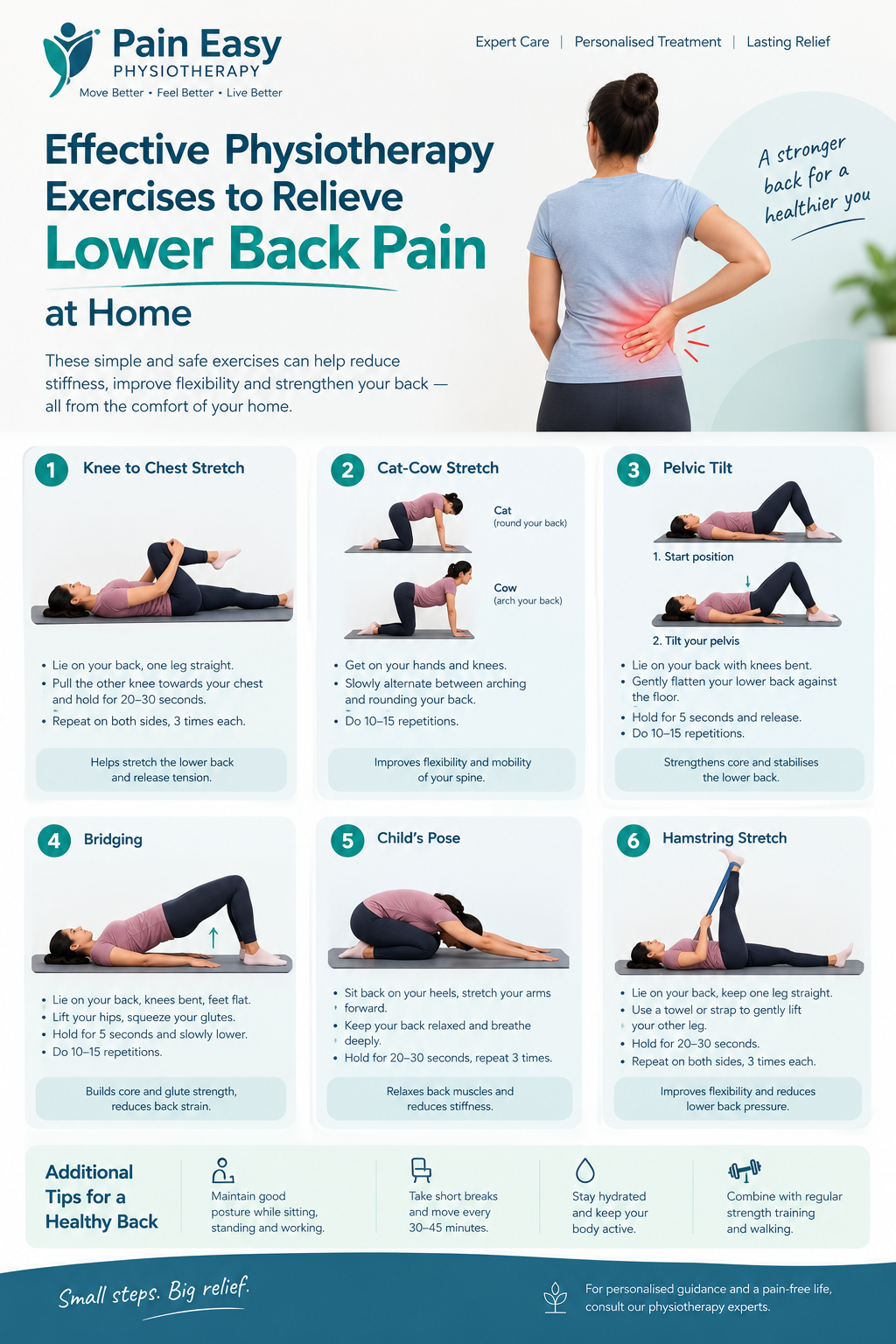
Lie on your back with knees bent and feet flat on the floor. Tighten your abdominal muscles and gently flatten your lower back against the floor. Hold for 5 seconds and relax. Repeat 10–15 times.
2. Knee-to-Chest Stretch
Lie on your back and bring one knee toward your chest while keeping the other foot on the floor. Hold for 15–20 seconds and switch sides. This stretch helps relax tight lower back muscles.
3. Cat–Cow Stretch
Start on all fours. Slowly arch your back upward like a cat, then gently lower your belly while lifting your head and tailbone. Repeat 10 times to improve spinal mobility.
4. Bridging Exercise
Lie on your back with knees bent. Tighten your core and lift your hips until your body forms a straight line from shoulders to knees. Hold for 5 seconds and lower slowly. Repeat 10 times.
5. Child’s Pose
Sit back on your heels with arms stretched forward and forehead resting on the floor. Hold for 20–30 seconds. This position releases tension in the lower back.
6. Hamstring Stretch
Tight hamstrings can increase lower back strain. While lying down, raise one leg and gently pull it toward you until you feel a stretch. Hold for 20 seconds on each side.
7. Walking
A simple daily walk for 15–20 minutes improves blood circulation, strengthens muscles, and speeds up recovery.
When to See a Physiotherapist
If your pain lasts more than a week, increases with movement, or radiates down the leg, professional assessment is recommended. A physiotherapist can design a personalized treatment plan based on your condition.
How PainEasy Can Help
At PainEasy, our expert physiotherapists provide personalized pain rehabilitation through in-clinic sessions, home visits, and tele-rehab programs. We focus on long-term recovery, not temporary relief.
Book your physiotherapy appointment today and take the first step toward a pain-free life.
Why Physiotherapy Is Important for Back Pain
Physiotherapy focuses on identifying the root cause of pain rather than just treating symptoms. With the right exercises and guidance, it improves flexibility, strengthens supporting muscles, and reduces stress on the spine.
7 Physiotherapy Exercises for Lower Back Pain
1. Pelvic Tilts
Lie on your back with knees bent and feet flat on the floor. Tighten your abdominal muscles and gently flatten your lower back against the floor. Hold for 5 seconds and relax. Repeat 10–15 times.
2. Knee-to-Chest Stretch
Lie on your back and bring one knee toward your chest while keeping the other foot on the floor. Hold for 15–20 seconds and switch sides. This stretch helps relax tight lower back muscles.
3. Cat–Cow Stretch
Start on all fours. Slowly arch your back upward like a cat, then gently lower your belly while lifting your head and tailbone. Repeat 10 times to improve spinal mobility.
4. Bridging Exercise
Lie on your back with knees bent. Tighten your core and lift your hips until your body forms a straight line from shoulders to knees. Hold for 5 seconds and lower slowly. Repeat 10 times.
5. Child’s Pose
Sit back on your heels with arms stretched forward and forehead resting on the floor. Hold for 20–30 seconds. This position releases tension in the lower back.
6. Hamstring Stretch
Tight hamstrings can increase lower back strain. While lying down, raise one leg and gently pull it toward you until you feel a stretch. Hold for 20 seconds on each side.
7. Walking
A simple daily walk for 15–20 minutes improves blood circulation, strengthens muscles, and speeds up recovery.
When to See a Physiotherapist
If your pain lasts more than a week, increases with movement, or radiates down the leg, professional assessment is recommended. A physiotherapist can design a personalized treatment plan based on your condition.
How PainEasy Can Help
At PainEasy, our expert physiotherapists provide personalized pain rehabilitation through in-clinic sessions, home visits, and tele-rehab programs. We focus on long-term recovery, not temporary relief.
Book your physiotherapy appointment today and take the first step toward a pain-free life.
Ready to Start Your Journey?
Contact us today to schedule a consultation with our expert team.
Contact Us Book Appointment