

How Physiotherapy Can Improve Work Productivity
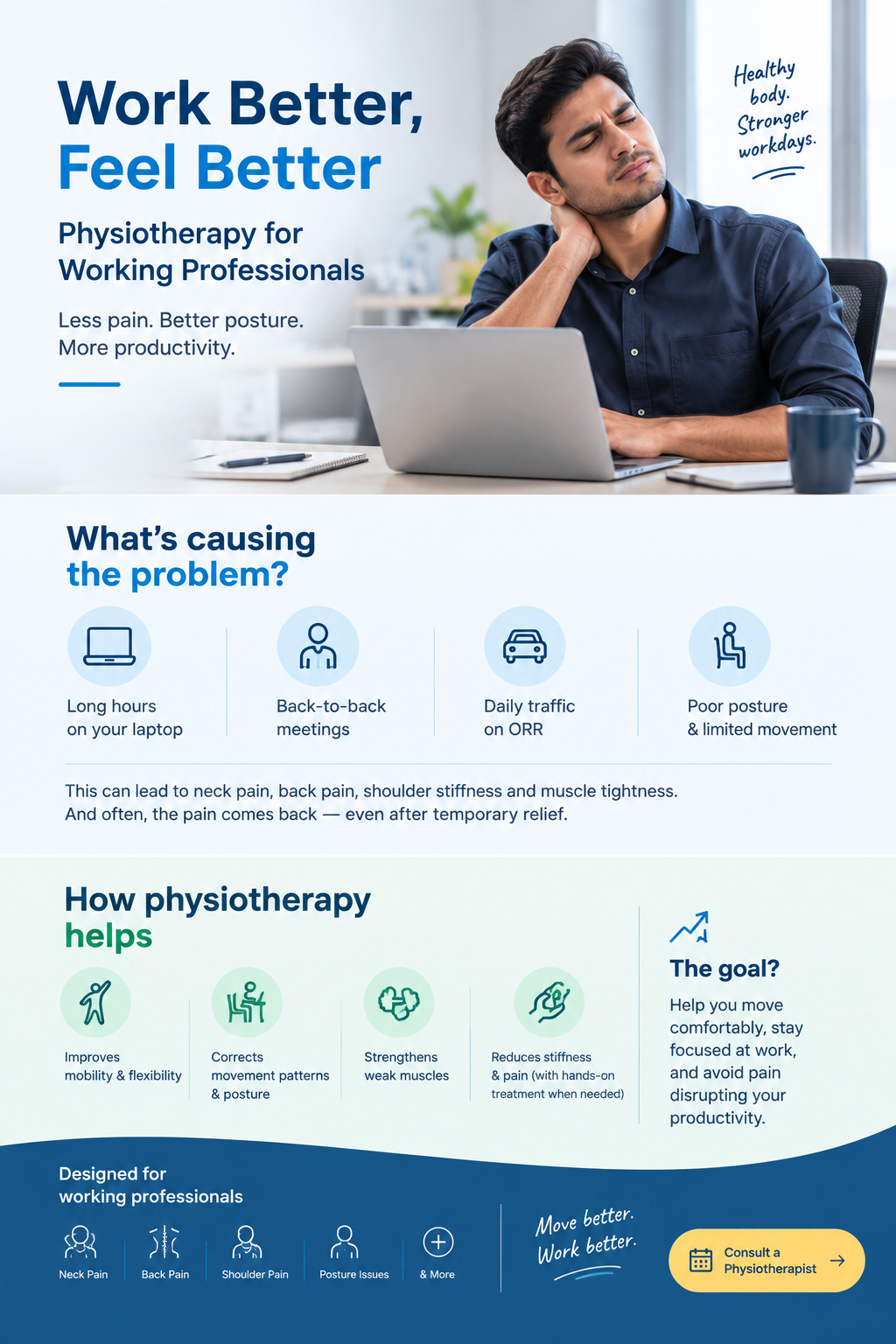
Long laptop hours, back-to-back meetings, stressful commutes and very little movement have become part of everyday life for many working professionals.Over time, this routine can lead to neck pain, back pain, shoulder stiffness, headaches, muscle tightness and recurring discomfort.
The problem is not only that these symptoms are uncomfortable. Persistent pain can also affect your concentration, energy, sleep, movement and ability to stay productive throughout the workday.
This is where physiotherapy can play an important role.
Physiotherapy is not simply about treating pain after it appears. A good physiotherapy program can help identify the factors contributing to your pain, improve mobility and strength, correct problematic movement patterns, and help you return to your daily activities more comfortably.
How Work Habits Can Lead to Pain
Modern desk jobs often require us to remain in the same position for several hours.
You may spend your morning working on a laptop, attend meetings through the afternoon, sit in traffic on the way home, and then continue using your phone or laptop in the evening.
The issue is usually not one particular activity. It is the combination of prolonged sitting, repetitive movements and insufficient movement throughout the day.
Some common factors include:
* Sitting at a desk for several hours
* Working on a laptop with poor screen positioning
* Keeping the neck in a forward position
* Rounded shoulders while working
* Sitting continuously without movement breaks
* Repetitive mouse and keyboard use
* Long commutes
* Limited physical activity
* Weakness in the muscles supporting the spine
* Previous injuries that were never fully rehabilitated
Over time, these factors can contribute to stiffness, reduced mobility and muscle fatigue.
Why Does the Pain Keep Coming Back?
One of the most common complaints from working professionals is:
"The pain gets better, but it comes back again."
This can happen because temporary pain relief does not necessarily address the factors that are contributing to the problem.
For example, someone may experience neck pain after spending eight hours at a laptop. A massage or pain medication may provide temporary relief, but if the person continues spending several hours in the same position every day without improving mobility or strength, the symptoms may return.
Similarly, someone with recurring lower back pain may feel better after a few days of rest but experience another episode when they return to their normal routine.
This is why physiotherapy often focuses on more than just reducing pain.
The objective is to understand why the problem is happening and what can be changed to reduce the chances of it repeatedly interfering with your daily life.
How Physiotherapy Can Help Working Professionals
1. Reducing Pain and Stiffness
Physiotherapy can help manage musculoskeletal pain through an appropriate combination of manual therapy, mobility exercises, therapeutic exercises and other treatment techniques depending on the individual's condition.
The treatment approach depends on factors such as:
* Where the pain is located
* How long it has been present
* What activities aggravate it
* Your movement and mobility
* Muscle strength
* Previous injuries
* Your work and lifestyle habits
The goal is not simply to make the painful area feel better for a few hours. It is to help you gradually return to comfortable movement and normal activities.
2. Improving Mobility
Spending long hours in one position can make certain joints and muscles feel stiff.
For example, desk workers may develop stiffness around the:
* Neck
* Upper back
* Shoulders
* Hips
* Lower back
Reduced mobility can make everyday movements more difficult and may cause you to compensate by using other parts of your body.
A physiotherapist can assess your movement and prescribe exercises designed to improve the mobility that you actually need.
Better mobility can make sitting, standing, walking and exercising more comfortable.
3. Improving Posture and Movement Habits
Posture is often discussed as if there is one perfect position that everyone should maintain throughout the day.
In reality, movement variety is extremely important.
Even a good sitting position can become uncomfortable if you stay in it continuously for several hours.
Physiotherapy can help you understand:
* How your current posture affects your symptoms
* How to position your workstation more comfortably
* Which movements you should incorporate during the workday
* How to avoid repeatedly stressing the same muscles and joints
* Which exercises can help you build better movement capacity
Instead of trying to "sit perfectly" all day, the aim is to create a work routine that allows your body to move regularly and tolerate your daily workload better.
4. Strengthening Weak Muscles
Pain and stiffness are not always caused by a lack of strength, but improving strength can be an important part of rehabilitation for many people.
For example, your physiotherapist may identify weaknesses involving the:
* Core
* Back muscles
* Gluteal muscles
* Shoulder muscles
* Neck and upper-back muscles
A personalised strengthening program can help your body handle the physical demands of your work and everyday activities more effectively.
The exercises don't necessarily need to be complicated.
In many cases, a few well-selected exercises performed consistently can be more useful than a long list of exercises that you cannot maintain.
5. Preventing the Same Problem From Repeating
One of the biggest advantages of physiotherapy is learning what you can do between treatment sessions.
Your physiotherapist may provide exercises, movement strategies and practical recommendations that you can incorporate into your routine.
For a desk worker, this could mean:
* Taking regular movement breaks
* Changing positions throughout the day
* Adjusting the workstation
* Performing short mobility exercises
* Building strength gradually
* Managing workload-related physical stress
The goal is to make these changes realistic enough to become part of your routine.
Can Physiotherapy Actually Improve Work Productivity?
Pain can be surprisingly distracting.
When your neck is constantly stiff, your lower back hurts every time you stand up, or your shoulder becomes uncomfortable after a few hours of computer work, part of your attention naturally shifts towards the discomfort.
You may find yourself:
* Changing positions repeatedly
* Taking more breaks because of discomfort
* Avoiding certain movements
* Feeling physically tired earlier in the day
* Struggling to concentrate
* Sleeping poorly because of discomfort
* Avoiding exercise after work
Physiotherapy cannot eliminate every cause of workplace stress or fatigue. However, improving physical comfort and movement can make it easier to focus on your actual work rather than constantly managing pain.
Think of it as improving your body's ability to handle your daily routine.
Common Problems Among Desk-Based Professionals
Working professionals commonly seek physiotherapy for problems such as:
Neck Pain
Long periods of computer use, phone use and static positions can contribute to neck discomfort and stiffness.
Shoulder Pain
Shoulder stiffness or pain may be associated with repetitive computer work, poor movement patterns, muscle weakness or other underlying conditions.
Upper Back Pain
The upper back can become stiff and uncomfortable after prolonged desk work, especially when combined with limited movement.
Lower Back Pain
Long periods of sitting, reduced physical activity and previous injuries can contribute to recurring lower back problems.
Headaches Associated With Neck Problems
Some headaches can be associated with musculoskeletal problems involving the neck. If headaches are new, severe or unusual, they should be medically evaluated rather than automatically assumed to be posture-related.
Wrist and Hand Discomfort
Extended keyboard and mouse use can contribute to repetitive strain and discomfort in some individuals.
What Does a Physiotherapy Assessment Involve?
A physiotherapy session should begin with understanding your problem rather than immediately starting treatment.
Your physiotherapist may ask about:
* Where you experience pain
* When it started
* What makes it worse or better
* Your work routine
* Your physical activity
* Previous injuries
* Sleep and daily activities
They may then assess your:
* Joint movement
* Muscle strength
* Flexibility
* Posture and movement patterns
* Functional movements
Based on the assessment, the physiotherapist can develop an appropriate treatment and exercise plan.
This personalised approach is important because two people with the same type of pain may not have the same underlying contributing factors.
Simple Ways to Reduce Work-Related Pain
Physiotherapy works best when treatment is supported by better daily habits.
Here are some practical changes that many desk workers can start with.
Move Regularly
Don't wait until the end of the workday to move.
Stand up, walk around or change your position regularly.
Even short movement breaks can help break up long periods of uninterrupted sitting.
Set Up Your Workstation Comfortably
Pay attention to:
* Screen height
* Chair support
* Keyboard and mouse position
* Distance from the screen
* Foot support
The goal isn't to find one "perfect" posture. It is to create a comfortable setup that allows you to change positions easily.
Don't Ignore Recurring Pain
If the same neck, shoulder or back pain keeps returning, repeatedly ignoring it may not be the best strategy.
Recurring symptoms are worth assessing so that you can understand what may be contributing to them.
Exercise Consistently
Regular physical activity can improve strength, mobility and general physical capacity.
Your physiotherapist can help you identify exercises appropriate for your condition and fitness level.
Take Care of Your Recovery
Work productivity is also influenced by sleep, stress, physical activity and recovery.
Your body needs adequate recovery to handle the demands of a long working day.
When Should You See a Physiotherapist?
You don't necessarily need to wait until pain becomes severe.
Consider consulting a physiotherapist if you have:
* Pain that keeps returning
* Neck or back stiffness that affects your work
* Shoulder pain that limits movement
* Pain that interferes with exercise
* Difficulty sitting or standing comfortably
* Symptoms following an injury
* Reduced mobility
* Pain that is affecting your daily activities
A physiotherapist can assess the problem and determine whether physiotherapy is appropriate or whether you should be referred to another healthcare professional.
Seek prompt medical attention for severe or rapidly worsening symptoms, significant trauma, unexplained weakness or numbness, loss of bladder or bowel control, fever with severe pain, or other concerning symptoms.
The Goal Isn't Just Less Pain — It's Better Function
For a working professional, successful treatment isn't necessarily about never feeling any discomfort again.
The bigger goal is being able to:
Work comfortably.
Move confidently.
Exercise regularly.
Sleep better.
And get through your day without constantly thinking about your pain.
Physiotherapy can help you build the mobility, strength and movement capacity needed to better handle your everyday routine.
At Pain Easy Physiotherapy, our approach is focused on understanding the individual problem, providing appropriate treatment, and helping patients develop practical strategies that they can continue using outside the clinic.
If neck pain, back pain, shoulder stiffness or recurring discomfort is interfering with your workday, getting the problem assessed by a physiotherapist can be a useful first step.
Frequently Asked Questions
Does sitting for long hours cause back pain?
Prolonged sitting can contribute to back discomfort, particularly when combined with limited movement, reduced physical activity, poor workstation setup or other individual factors. Regular movement and an appropriate exercise program can help improve your ability to tolerate prolonged desk work.
Can physiotherapy help with neck pain from laptop use?
Physiotherapy can help many people with neck pain by addressing factors such as mobility, strength, movement habits and workstation-related issues. Your treatment should be based on an individual assessment rather than assuming that laptop use is the only cause.
How often should I take breaks from sitting?
There isn't one universal schedule that works for everyone. The important principle is to avoid remaining in the same position continuously for very long periods. Short, regular movement breaks throughout the workday can be a practical approach.
Can physiotherapy improve posture?
Physiotherapy can help you understand your movement patterns and improve strength, mobility and body awareness. Rather than trying to maintain a rigid "perfect posture," the focus is generally on developing comfortable and varied movement habits.
Should I see a physiotherapist even if my pain is mild?
If mild pain keeps recurring, gradually worsens or begins affecting your work, exercise or daily activities, an assessment can help identify contributing factors before the problem becomes more disruptive.
Move Better. Work Better.
Your work may require you to spend hours at a laptop, attend meetings and deal with long commutes. Your body still needs movement, strength and recovery.
If recurring neck pain, back pain, shoulder stiffness or other physical discomfort is affecting your productivity, don't simply keep working through it.
A personalised physiotherapy assessment can help you understand the problem and work towards moving more comfortably in your everyday life.
Long laptop hours, back-to-back meetings, stressful commutes and very little movement have become part of everyday life for many working professionals.Over time, this routine can lead to neck pain, back pain, shoulder stiffness, headaches, muscle tightness and recurring discomfort.
The problem is not only that these symptoms are uncomfortable. Persistent pain can also affect your concentration, energy, sleep, movement and ability to stay productive throughout the workday.
This is where physiotherapy can play an important role.
Physiotherapy is not simply about treating pain after it appears. A good physiotherapy program can help identify the factors contributing to your pain, improve mobility and strength, correct problematic movement patterns, and help you return to your daily activities more comfortably.
How Work Habits Can Lead to Pain
Modern desk jobs often require us to remain in the same position for several hours.
You may spend your morning working on a laptop, attend meetings through the afternoon, sit in traffic on the way home, and then continue using your phone or laptop in the evening.
The issue is usually not one particular activity. It is the combination of prolonged sitting, repetitive movements and insufficient movement throughout the day.
Some common factors include:
* Sitting at a desk for several hours
* Working on a laptop with poor screen positioning
* Keeping the neck in a forward position
* Rounded shoulders while working
* Sitting continuously without movement breaks
* Repetitive mouse and keyboard use
* Long commutes
* Limited physical activity
* Weakness in the muscles supporting the spine
* Previous injuries that were never fully rehabilitated
Over time, these factors can contribute to stiffness, reduced mobility and muscle fatigue.
Why Does the Pain Keep Coming Back?
One of the most common complaints from working professionals is:
"The pain gets better, but it comes back again."
This can happen because temporary pain relief does not necessarily address the factors that are contributing to the problem.
For example, someone may experience neck pain after spending eight hours at a laptop. A massage or pain medication may provide temporary relief, but if the person continues spending several hours in the same position every day without improving mobility or strength, the symptoms may return.
Similarly, someone with recurring lower back pain may feel better after a few days of rest but experience another episode when they return to their normal routine.
This is why physiotherapy often focuses on more than just reducing pain.
The objective is to understand why the problem is happening and what can be changed to reduce the chances of it repeatedly interfering with your daily life.
How Physiotherapy Can Help Working Professionals
1. Reducing Pain and Stiffness
Physiotherapy can help manage musculoskeletal pain through an appropriate combination of manual therapy, mobility exercises, therapeutic exercises and other treatment techniques depending on the individual's condition.
The treatment approach depends on factors such as:
* Where the pain is located
* How long it has been present
* What activities aggravate it
* Your movement and mobility
* Muscle strength
* Previous injuries
* Your work and lifestyle habits
The goal is not simply to make the painful area feel better for a few hours. It is to help you gradually return to comfortable movement and normal activities.
2. Improving Mobility
Spending long hours in one position can make certain joints and muscles feel stiff.
For example, desk workers may develop stiffness around the:
* Neck
* Upper back
* Shoulders
* Hips
* Lower back
Reduced mobility can make everyday movements more difficult and may cause you to compensate by using other parts of your body.
A physiotherapist can assess your movement and prescribe exercises designed to improve the mobility that you actually need.
Better mobility can make sitting, standing, walking and exercising more comfortable.
3. Improving Posture and Movement Habits
Posture is often discussed as if there is one perfect position that everyone should maintain throughout the day.
In reality, movement variety is extremely important.
Even a good sitting position can become uncomfortable if you stay in it continuously for several hours.
Physiotherapy can help you understand:
* How your current posture affects your symptoms
* How to position your workstation more comfortably
* Which movements you should incorporate during the workday
* How to avoid repeatedly stressing the same muscles and joints
* Which exercises can help you build better movement capacity
Instead of trying to "sit perfectly" all day, the aim is to create a work routine that allows your body to move regularly and tolerate your daily workload better.
4. Strengthening Weak Muscles
Pain and stiffness are not always caused by a lack of strength, but improving strength can be an important part of rehabilitation for many people.
For example, your physiotherapist may identify weaknesses involving the:
* Core
* Back muscles
* Gluteal muscles
* Shoulder muscles
* Neck and upper-back muscles
A personalised strengthening program can help your body handle the physical demands of your work and everyday activities more effectively.
The exercises don't necessarily need to be complicated.
In many cases, a few well-selected exercises performed consistently can be more useful than a long list of exercises that you cannot maintain.
5. Preventing the Same Problem From Repeating
One of the biggest advantages of physiotherapy is learning what you can do between treatment sessions.
Your physiotherapist may provide exercises, movement strategies and practical recommendations that you can incorporate into your routine.
For a desk worker, this could mean:
* Taking regular movement breaks
* Changing positions throughout the day
* Adjusting the workstation
* Performing short mobility exercises
* Building strength gradually
* Managing workload-related physical stress
The goal is to make these changes realistic enough to become part of your routine.
Can Physiotherapy Actually Improve Work Productivity?
Pain can be surprisingly distracting.
When your neck is constantly stiff, your lower back hurts every time you stand up, or your shoulder becomes uncomfortable after a few hours of computer work, part of your attention naturally shifts towards the discomfort.
You may find yourself:
* Changing positions repeatedly
* Taking more breaks because of discomfort
* Avoiding certain movements
* Feeling physically tired earlier in the day
* Struggling to concentrate
* Sleeping poorly because of discomfort
* Avoiding exercise after work
Physiotherapy cannot eliminate every cause of workplace stress or fatigue. However, improving physical comfort and movement can make it easier to focus on your actual work rather than constantly managing pain.
Think of it as improving your body's ability to handle your daily routine.
Common Problems Among Desk-Based Professionals
Working professionals commonly seek physiotherapy for problems such as:
Neck Pain
Long periods of computer use, phone use and static positions can contribute to neck discomfort and stiffness.
Shoulder Pain
Shoulder stiffness or pain may be associated with repetitive computer work, poor movement patterns, muscle weakness or other underlying conditions.
Upper Back Pain
The upper back can become stiff and uncomfortable after prolonged desk work, especially when combined with limited movement.
Lower Back Pain
Long periods of sitting, reduced physical activity and previous injuries can contribute to recurring lower back problems.
Headaches Associated With Neck Problems
Some headaches can be associated with musculoskeletal problems involving the neck. If headaches are new, severe or unusual, they should be medically evaluated rather than automatically assumed to be posture-related.
Wrist and Hand Discomfort
Extended keyboard and mouse use can contribute to repetitive strain and discomfort in some individuals.
What Does a Physiotherapy Assessment Involve?
A physiotherapy session should begin with understanding your problem rather than immediately starting treatment.
Your physiotherapist may ask about:
* Where you experience pain
* When it started
* What makes it worse or better
* Your work routine
* Your physical activity
* Previous injuries
* Sleep and daily activities
They may then assess your:
* Joint movement
* Muscle strength
* Flexibility
* Posture and movement patterns
* Functional movements
Based on the assessment, the physiotherapist can develop an appropriate treatment and exercise plan.
This personalised approach is important because two people with the same type of pain may not have the same underlying contributing factors.
Simple Ways to Reduce Work-Related Pain
Physiotherapy works best when treatment is supported by better daily habits.
Here are some practical changes that many desk workers can start with.
Move Regularly
Don't wait until the end of the workday to move.
Stand up, walk around or change your position regularly.
Even short movement breaks can help break up long periods of uninterrupted sitting.
Set Up Your Workstation Comfortably
Pay attention to:
* Screen height
* Chair support
* Keyboard and mouse position
* Distance from the screen
* Foot support
The goal isn't to find one "perfect" posture. It is to create a comfortable setup that allows you to change positions easily.
Don't Ignore Recurring Pain
If the same neck, shoulder or back pain keeps returning, repeatedly ignoring it may not be the best strategy.
Recurring symptoms are worth assessing so that you can understand what may be contributing to them.
Exercise Consistently
Regular physical activity can improve strength, mobility and general physical capacity.
Your physiotherapist can help you identify exercises appropriate for your condition and fitness level.
Take Care of Your Recovery
Work productivity is also influenced by sleep, stress, physical activity and recovery.
Your body needs adequate recovery to handle the demands of a long working day.
When Should You See a Physiotherapist?
You don't necessarily need to wait until pain becomes severe.
Consider consulting a physiotherapist if you have:
* Pain that keeps returning
* Neck or back stiffness that affects your work
* Shoulder pain that limits movement
* Pain that interferes with exercise
* Difficulty sitting or standing comfortably
* Symptoms following an injury
* Reduced mobility
* Pain that is affecting your daily activities
A physiotherapist can assess the problem and determine whether physiotherapy is appropriate or whether you should be referred to another healthcare professional.
Seek prompt medical attention for severe or rapidly worsening symptoms, significant trauma, unexplained weakness or numbness, loss of bladder or bowel control, fever with severe pain, or other concerning symptoms.
The Goal Isn't Just Less Pain — It's Better Function
For a working professional, successful treatment isn't necessarily about never feeling any discomfort again.
The bigger goal is being able to:
Work comfortably.
Move confidently.
Exercise regularly.
Sleep better.
And get through your day without constantly thinking about your pain.
Physiotherapy can help you build the mobility, strength and movement capacity needed to better handle your everyday routine.
At Pain Easy Physiotherapy, our approach is focused on understanding the individual problem, providing appropriate treatment, and helping patients develop practical strategies that they can continue using outside the clinic.
If neck pain, back pain, shoulder stiffness or recurring discomfort is interfering with your workday, getting the problem assessed by a physiotherapist can be a useful first step.
Frequently Asked Questions
Does sitting for long hours cause back pain?
Prolonged sitting can contribute to back discomfort, particularly when combined with limited movement, reduced physical activity, poor workstation setup or other individual factors. Regular movement and an appropriate exercise program can help improve your ability to tolerate prolonged desk work.
Can physiotherapy help with neck pain from laptop use?
Physiotherapy can help many people with neck pain by addressing factors such as mobility, strength, movement habits and workstation-related issues. Your treatment should be based on an individual assessment rather than assuming that laptop use is the only cause.
How often should I take breaks from sitting?
There isn't one universal schedule that works for everyone. The important principle is to avoid remaining in the same position continuously for very long periods. Short, regular movement breaks throughout the workday can be a practical approach.
Can physiotherapy improve posture?
Physiotherapy can help you understand your movement patterns and improve strength, mobility and body awareness. Rather than trying to maintain a rigid "perfect posture," the focus is generally on developing comfortable and varied movement habits.
Should I see a physiotherapist even if my pain is mild?
If mild pain keeps recurring, gradually worsens or begins affecting your work, exercise or daily activities, an assessment can help identify contributing factors before the problem becomes more disruptive.
Move Better. Work Better.
Your work may require you to spend hours at a laptop, attend meetings and deal with long commutes. Your body still needs movement, strength and recovery.
If recurring neck pain, back pain, shoulder stiffness or other physical discomfort is affecting your productivity, don't simply keep working through it.
A personalised physiotherapy assessment can help you understand the problem and work towards moving more comfortably in your everyday life.
Ready to Start Your Journey?
Contact us today to schedule a consultation with our expert team.
Contact Us Book Appointment