

Back pain can be surprisingly disruptive, especially when your work involves sitting at a desk for several hours every day.
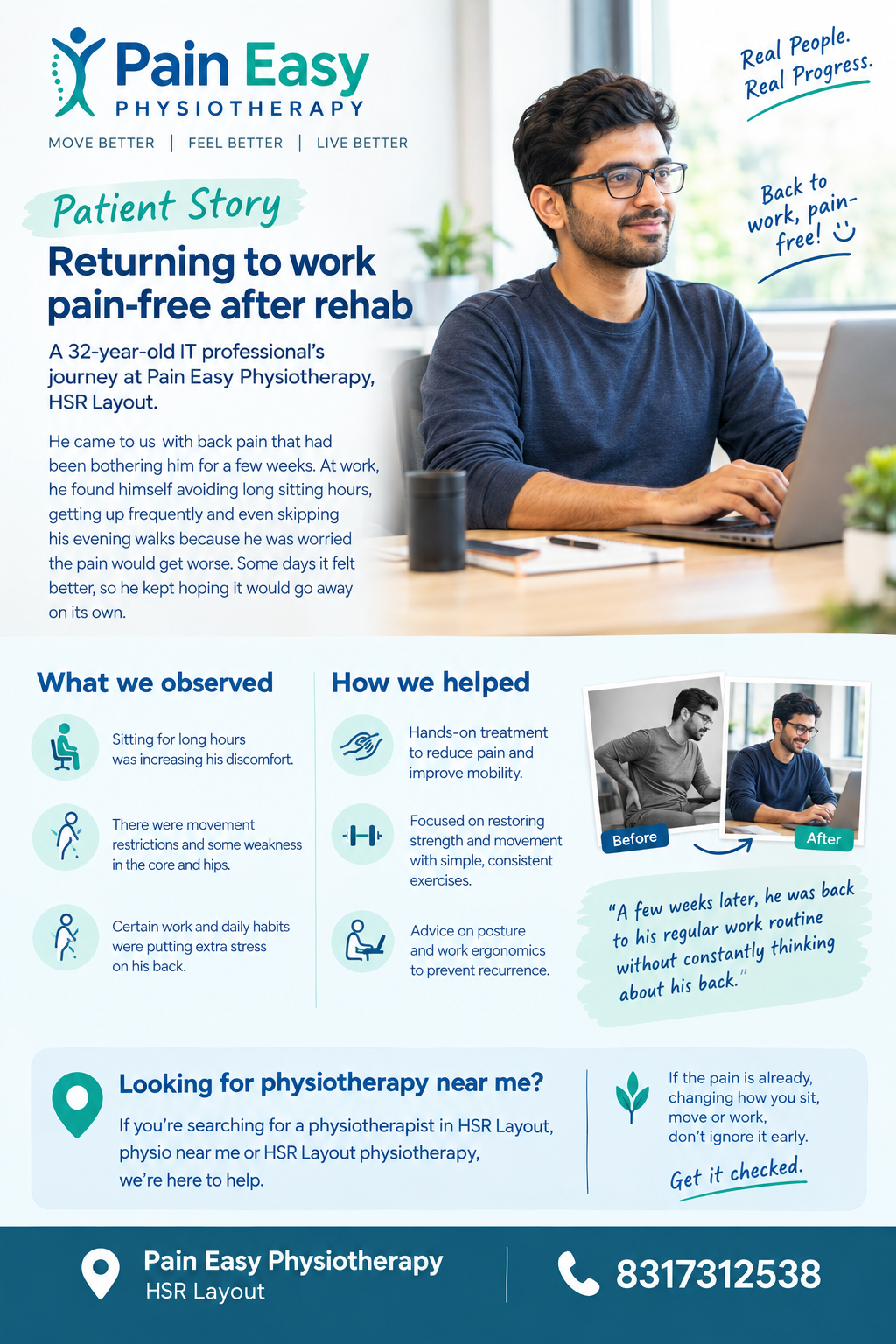
We recently had a 32-year-old IT professional visit us at Pain Easy Physiotherapy, HSR Layout, after dealing with back pain for several weeks. What initially seemed like something that would settle on its own had gradually started affecting the way he worked, moved and spent his evenings.
When Back Pain Starts Affecting Your Daily Routine
When he first came to our physiotherapy clinic in HSR Layout, he wasn't experiencing severe pain all the time.
In fact, that was part of the problem.
Some days felt better than others, so he kept hoping the discomfort would eventually disappear on its own. But gradually, he started changing his routine because he was worried about making the pain worse.
He began avoiding certain movements at work, getting up frequently from his chair and even skipping some of his usual evening activities.
For someone working in IT, spending long hours at a desk can make this particularly frustrating. Sitting through meetings, working on a laptop, commuting and then spending more time sitting at home can all add up to a very sedentary day.
But during our assessment, we found that prolonged sitting wasn't the only factor contributing to his back pain.
What We Found During the Physiotherapy Assessment
A proper physiotherapy assessment for back pain is about more than simply identifying where the pain is.
We looked at how he was moving, his mobility, strength and the movements that were causing discomfort.
There were some restrictions in his movement, areas of weakness and a few movement habits that appeared to be placing additional stress on his back.
This is an important distinction when dealing with lower back pain.
Two people can both spend eight hours sitting at a desk and experience completely different symptoms. The reason is that back pain can be influenced by several factors, including mobility, muscle strength, activity levels, movement patterns and daily habits.
This is why we generally prefer to understand the individual problem before deciding on a treatment approach.
How Physiotherapy Helped With His Back Pain
We initially used hands-on treatment to help reduce his discomfort and make movement more comfortable.
However, the larger focus of his rehabilitation was not simply reducing pain.
We wanted to gradually restore his movement, mobility and strength so that he could become more confident using his back during his normal daily activities.
His exercise programme was deliberately kept practical.
Since he had a demanding work schedule, the exercises needed to be simple enough to fit into his day. A complicated programme that someone cannot follow consistently is rarely useful in the long run.
So, we focused on exercises that he could realistically perform alongside his work routine.
The aim was to gradually build his tolerance for normal movements rather than encouraging him to constantly avoid activities because of fear of pain.
Returning to Work Without Constantly Thinking About His Back
Over the following weeks, his movement and confidence gradually improved.
The most encouraging part wasn't simply that his pain had reduced.
He was able to return to his regular work routine without constantly thinking about his back.
He could sit, move around and get through his normal day without the same level of worry that had brought him to the clinic in the first place.
For us, that is an important part of physiotherapy rehabilitation.
The goal isn't always just to make the pain disappear temporarily. It is also about helping a person regain confidence in movement and return to the activities that matter to them.
Why IT Professionals Commonly Experience Back Pain
Back pain is a common complaint among people whose work involves prolonged sitting.
For IT professionals in HSR Layout, Bengaluru, a typical day may involve several hours at a computer, meetings, commuting and limited opportunities for movement during working hours.
Over time, this routine can contribute to stiffness and reduced physical activity.
However, it is worth remembering that sitting itself is not necessarily the sole cause of back pain.
Factors such as reduced physical activity, muscle weakness, limited mobility, repetitive movements, poor work habits and sudden increases in activity can all play a role.
This is why an individual assessment can be useful when back pain continues or starts interfering with everyday activities.
When Should You See a Physiotherapist for Back Pain?
Many people wait until their back pain becomes difficult to manage before looking for help.
Others continue working through the discomfort because they have experienced good and bad days and assume that it will eventually settle.
If your back pain is starting to affect the way you sit, stand, walk, work, exercise or sleep, it may be worth getting it assessed rather than continuously changing your routine around the pain.
A physiotherapist can assess your movement and identify factors that may be contributing to your symptoms, while also helping you understand appropriate exercises and activity modifications.
Of course, not every type of back pain requires physiotherapy, and persistent or concerning symptoms may require medical evaluation.
Looking for a Physiotherapist in HSR Layout?
If you're searching online for “physiotherapy near me,” “physiotherapist near me,” “physio near me,” “physiotherapist in HSR Layout” or “HSR Layout physiotherapy,” and your back pain has started interfering with your work or everyday activities, getting an assessment can be a useful first step.
At Pain Easy Physiotherapy, HSR Layout, we assess each patient individually and design treatment around their symptoms, movement, strength and daily routine.
Whether you're dealing with lower back pain, work-related back discomfort, stiffness from prolonged sitting or difficulty returning to your usual activities, the focus is on helping you move better and get back to your routine.
Pain Easy Physiotherapy, HSR Layout
For patients looking for back pain physiotherapy in HSR Layout, physiotherapy for lower back pain, or a physiotherapy clinic near them, our team provides personalised assessment and rehabilitation based on individual needs.
If your back pain is already changing the way you work or move, don't wait for it to completely take over your routine. Getting it assessed early can help you understand what may be contributing to the problem and what you can do about it.
We recently had a 32-year-old IT professional visit us at Pain Easy Physiotherapy, HSR Layout, after dealing with back pain for several weeks. What initially seemed like something that would settle on its own had gradually started affecting the way he worked, moved and spent his evenings.
When Back Pain Starts Affecting Your Daily Routine
When he first came to our physiotherapy clinic in HSR Layout, he wasn't experiencing severe pain all the time.
In fact, that was part of the problem.
Some days felt better than others, so he kept hoping the discomfort would eventually disappear on its own. But gradually, he started changing his routine because he was worried about making the pain worse.
He began avoiding certain movements at work, getting up frequently from his chair and even skipping some of his usual evening activities.
For someone working in IT, spending long hours at a desk can make this particularly frustrating. Sitting through meetings, working on a laptop, commuting and then spending more time sitting at home can all add up to a very sedentary day.
But during our assessment, we found that prolonged sitting wasn't the only factor contributing to his back pain.
What We Found During the Physiotherapy Assessment
A proper physiotherapy assessment for back pain is about more than simply identifying where the pain is.
We looked at how he was moving, his mobility, strength and the movements that were causing discomfort.
There were some restrictions in his movement, areas of weakness and a few movement habits that appeared to be placing additional stress on his back.
This is an important distinction when dealing with lower back pain.
Two people can both spend eight hours sitting at a desk and experience completely different symptoms. The reason is that back pain can be influenced by several factors, including mobility, muscle strength, activity levels, movement patterns and daily habits.
This is why we generally prefer to understand the individual problem before deciding on a treatment approach.
How Physiotherapy Helped With His Back Pain
We initially used hands-on treatment to help reduce his discomfort and make movement more comfortable.
However, the larger focus of his rehabilitation was not simply reducing pain.
We wanted to gradually restore his movement, mobility and strength so that he could become more confident using his back during his normal daily activities.
His exercise programme was deliberately kept practical.
Since he had a demanding work schedule, the exercises needed to be simple enough to fit into his day. A complicated programme that someone cannot follow consistently is rarely useful in the long run.
So, we focused on exercises that he could realistically perform alongside his work routine.
The aim was to gradually build his tolerance for normal movements rather than encouraging him to constantly avoid activities because of fear of pain.
Returning to Work Without Constantly Thinking About His Back
Over the following weeks, his movement and confidence gradually improved.
The most encouraging part wasn't simply that his pain had reduced.
He was able to return to his regular work routine without constantly thinking about his back.
He could sit, move around and get through his normal day without the same level of worry that had brought him to the clinic in the first place.
For us, that is an important part of physiotherapy rehabilitation.
The goal isn't always just to make the pain disappear temporarily. It is also about helping a person regain confidence in movement and return to the activities that matter to them.
Why IT Professionals Commonly Experience Back Pain
Back pain is a common complaint among people whose work involves prolonged sitting.
For IT professionals in HSR Layout, Bengaluru, a typical day may involve several hours at a computer, meetings, commuting and limited opportunities for movement during working hours.
Over time, this routine can contribute to stiffness and reduced physical activity.
However, it is worth remembering that sitting itself is not necessarily the sole cause of back pain.
Factors such as reduced physical activity, muscle weakness, limited mobility, repetitive movements, poor work habits and sudden increases in activity can all play a role.
This is why an individual assessment can be useful when back pain continues or starts interfering with everyday activities.
When Should You See a Physiotherapist for Back Pain?
Many people wait until their back pain becomes difficult to manage before looking for help.
Others continue working through the discomfort because they have experienced good and bad days and assume that it will eventually settle.
If your back pain is starting to affect the way you sit, stand, walk, work, exercise or sleep, it may be worth getting it assessed rather than continuously changing your routine around the pain.
A physiotherapist can assess your movement and identify factors that may be contributing to your symptoms, while also helping you understand appropriate exercises and activity modifications.
Of course, not every type of back pain requires physiotherapy, and persistent or concerning symptoms may require medical evaluation.
Looking for a Physiotherapist in HSR Layout?
If you're searching online for “physiotherapy near me,” “physiotherapist near me,” “physio near me,” “physiotherapist in HSR Layout” or “HSR Layout physiotherapy,” and your back pain has started interfering with your work or everyday activities, getting an assessment can be a useful first step.
At Pain Easy Physiotherapy, HSR Layout, we assess each patient individually and design treatment around their symptoms, movement, strength and daily routine.
Whether you're dealing with lower back pain, work-related back discomfort, stiffness from prolonged sitting or difficulty returning to your usual activities, the focus is on helping you move better and get back to your routine.
Pain Easy Physiotherapy, HSR Layout
For patients looking for back pain physiotherapy in HSR Layout, physiotherapy for lower back pain, or a physiotherapy clinic near them, our team provides personalised assessment and rehabilitation based on individual needs.
If your back pain is already changing the way you work or move, don't wait for it to completely take over your routine. Getting it assessed early can help you understand what may be contributing to the problem and what you can do about it.
Ready to Start Your Journey?
Contact us today to schedule a consultation with our expert team.
Contact Us Book Appointment